PHOTO BY FERNANDO J. SAM-SIN
By
Jessie Bengoa, MS
![]()
|Contributing Veterinarians:

Jessie Bengoa, MS
Platinum Performance®
Jessie Bengoa, MS is the author of recent articles on Equine Kissing Spines, Equine Gastric Ulcer Syndrome and Equine Herpes Virus. In addition to being a lifelong horsewoman, Jessie has over 17 years of experience in the world of food and nutrition with special expertise in equine nutrition.
Dr. Cricket Russillo, Dr. Matt Durham, & Dr. Erin Contino
![]()
![]()
![]()

Cricket Russillo, DVM, ISELP
High Performance Equine

Matt Durham, DVM, DACVSMR
Platinum Performance®

Erin Contino, DVM, DACVSMR
Colorado State University
Building and Maintaining a Durable Athlete Takes Preventive Care, Mindful Training, Focused Nutrition and a Care Team Fully in Tune With the Horse
Horses today are finely tuned athletes operating at a higher level than ever previously achieved. Evolving over time through strategic breeding, more advanced veterinary medicine, preventive solutions, improved nutrition and all-around better science, horses are running faster, jumping higher and performing nearly every discipline with more speed, agility and stamina than ever before. As riders, trainers and veterinarians, we’re constantly in pursuit of the proverbial Holy Grail, asking ourselves: how do we build horses that are durable, adaptable and capable of achieving long, healthy, sound and successful careers in the show pen? The answer is multi-factorial and encompasses a range of preventive strategies coupled with advanced learning in how to optimize conditioning, preparation, performance, recovery and, ultimately, how to put the package together in a repeatable way.
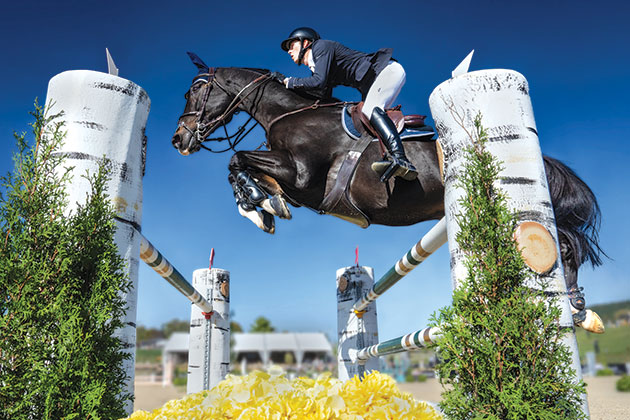
PHOTO BY SHANNON BRINKMAN
Core stability exercises build those muscles that we can’t even see or feel, and that helps the horse become less susceptible to injury.
Adapting to a Rigorous Show Environment
The science and practice of sports medicine have advanced considerably over the past several decades, taking our ability to understand, treat, heal and rehabilitate the sport horse to entirely new heights. While the caliber of horses in competition has undeniably risen, so too has the connectedness within the care team; grooms, riders, trainers, veterinarians, farriers and physiotherapists each contribute vital expertise that benefits the horse in both the short- and long-term.
Technology and novel research have laid the foundation for more predictive, preventive and personalized medicine, taking athletes that are traveling and showing more frequently, and better equipping them for sustainable health and soundness. “The schedule has forced our hand to change our approach,” says Dr. Cricket Russillo, a renowned sports medicine practitioner with over 20 years spent treating primarily show jumping and dressage horses at the highest levels of sport. She’s a certified member of the International Society of Equine Locomotor Pathology (ISELP), owner of High Performance Equine and a go-to authority figure in how to build competition horses with staying power.
“We’re not just thinking about musculoskeletal health — although that’s important — we’re incorporating all aspects of diet, podiatry, farriery and physiotherapy. It takes a team to keep these horses in top shape.”
— Cricket Russillo, DVM, ISELP
High Performance Equine
“The time off that the horses might have seen in the winter months, for example, is just no longer there. We’ve had to adapt and switch gears, focusing on the preventative exam, looking at these horses routinely, trying to get a sense of their baseline and understanding where their weaknesses lie, so we can stay ahead of the curve. We’re not just thinking about musculoskeletal health — although that’s important — we’re incorporating all aspects of diet, podiatry, farriery and physiotherapy. It takes a team to keep these horses in top shape.”
The veterinarians treating equine athletes have shifted their focus to prevention in numerous ways, including the frequency at which they see their patients. “One of the bigger aspects of my care plan is the recheck exam,” explains Dr. Russillo. “I get my hands and eyes on these horses more often rather than seeing them only when there’s a problem. I’m watching them move and fine-tuning to maintain comfort and make sure I’m not missing anything.” Like many of her colleagues, Dr. Russillo has incorporated a gait analysis app into her program, allowing clients to send videos of their horses from anywhere. Those videos are then analyzed using artificial intelligence (AI) technology, delivering real-time gait analysis designed to catch more subtle asymmetries and changes in movement patterns that may indicate a subtle lameness. “I can share app access with the groom or the rider, and we can record some straight-line trials to keep tabs on a horse that’s recovering from an injury, for instance,” she explains.
PHOTOS BY ELIZABETH HAY PHOTOGRAPHY
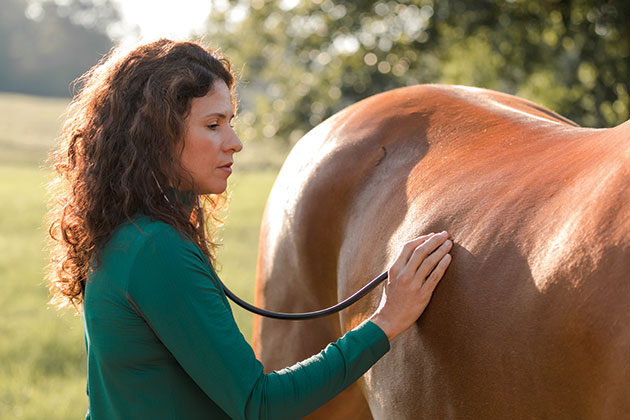
“I get my hands and eyes on these horses more often rather than seeing them only when there’s a problem,” says Dr. Cricket Russillo, seen here.
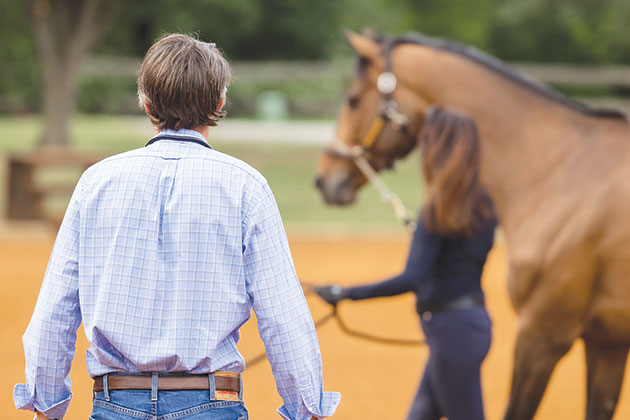
Dr. David Gilchrist evaluates his patient’s gait. Many veterinarians have incorporated a gait analysis app into their program, allowing clients to send videos of their horses from anywhere. Those videos are analyzed using artificial intelligence, delivering real-time gait analysis designed to catch more subtle asymmetries and changes in movement patterns.
Proper Conditioning is King
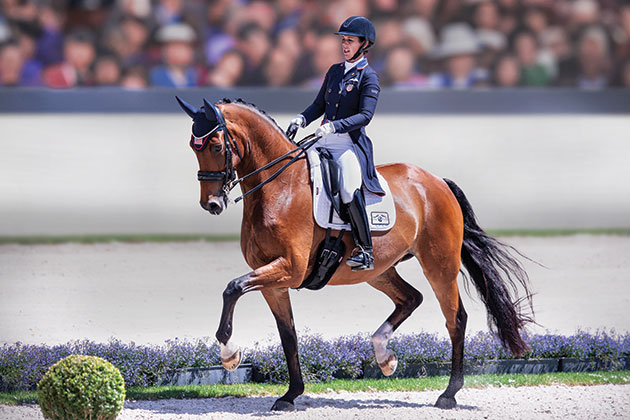
PHOTO BY SHANNON BRINKMAN
“The fundamentals of dressage should apply to every horse, in my opinion, because it’s about developing balance and proprioception,” says Dr. Matt Durham. “For an athlete to perform well, they need to know where their body is in space.”
Traditionally, both riders and veterinarians focused on the limbs when looking to prevent, diagnose and treat lameness. As knowledge has progressed, medicine has advanced to consider the surrounding musculature and its role in a horse’s ability to avoid unsoundness. “Obviously, there's a lot that goes on in the limbs in terms of arthritis, tendon injuries and that sort of thing. But what ties it all together, what moves the horse around, is their core,” explains Platinum Performance’s® own Dr. Matt Durham. He’s a board-certified equine sports medicine and rehabilitation practitioner and a veteran of top-tier sport, with over 20 years spent treating English and Western performance horses.
“One of the ways we can influence the core is in our early development of these horses.” Dr. Durham likes to paint the picture of a warmblood bound for the jumping ring. They’re large animals to say the least, and by the time they’re 3-5 years old, they’ve grown to the equivalent of a tall, slightly uncoordinated and not-yet-fully-developed high school or college athlete. “They’re like a big baby,” he says chuckling. “If we try to put a high school athlete into professional sports, they’re not going to be up to the task developmentally. For that reason, it becomes very important that we develop core strength properly in these young horses.”
“I’ve seen numerous juvenile athletes, and jumpers are a great example: their ability to propel themselves over a fence and then land in a way that is safe is altered by their core and that makes horses with an underdeveloped core more vulnerable to injuries.” For vital core strength, Dr. Durham advocates the basics of dressage as an exceptional means by which to accomplish properly conditioned core musculature. “The fundamentals of dressage should apply to every horse, in my opinion, because it’s about developing balance and proprioception. For an athlete to perform well, they need to know where their body is in space. Core stability exercises build those muscles that we can’t even see or feel, and that helps the horse become less susceptible to injury.”
Core development is fundamental, even before a horse becomes an athlete, and it’s in that timeframe that Dr. Durham also advocates more general and varied work, rather than training with solely task-specific exercise. “If you think about kids who have grown to become professional athletes, they have likely played numerous sports throughout childhood and high school athletics. Does doing that help a professional athlete hone their skills in their chosen sport? Maybe not. But, it’s those fundamental and varied exercises that develop resilience and balance, along with the ability to handle all sorts of other tasks. It’s very similar in horses.”
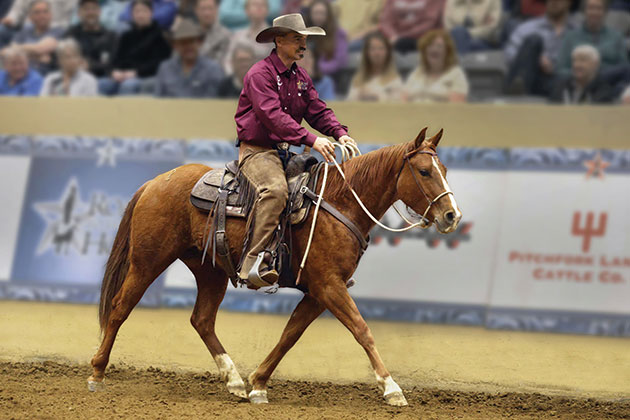
An example is seen in National Reined Cow Horse Association (NRCHA) Snaffle Bit Futurity Open Champion Nick Dowers. While Time for the Diamond may have won the cow horse world’s most coveted competition, the stallion regularly gets the call to gather cattle in the Western Nevada mountains. Dowers maintains that the work is equally beneficial for the stud’s mind and body.
Congrats!
Nick Dowers wins Road to the Horse World Championship Colt Starting Competition for the third time!
Nick Dowers
NRCHA Million Dollar Rider
3-Time Road to the Horse World Champion
Platinum Performance® Client since 2009
Nasty Tea Pot
(Nasty Cd X Shiney Tea Pot)
Bred by Pitchfork Ranch
Sleuthing Poor Performance
So often in sports medicine, veterinarians are communicating with highly in-tune grooms, riders and trainers who intimately know the nuances of each horse, their movements, feel and typical patterns. Sometimes, the chief complaint to a veterinarian is that the animal simply feels “off.” Something isn’t right, and though it’s subtle, a slight decrease in performance is being seen or felt.
Dr. Erin Contino lives in this space on the daily. As a board-certified equine sports medicine and rehabilitation specialist at Colorado State University’s famed College of Veterinary Medicine and Biomedical Sciences, her research focus in recent years has zeroed in on poor performance. A life-long, three-day eventing rider herself, she knows the feeling. “These horses often present with vague poor performance. The first question I’m asking myself is ‘Have we asked more of the horse than it’s physically capable of doing?’ Not all basketball players are bound for the NBA, and along those lines, we sometimes push some horses further than what they’re capable of. It’s a hard conversation to have, but I think it’s necessary. And, we have to be honest with ourselves.”
When a capable athlete is standing in front of her due to decreased performance, her system for establishing a root cause has evolved over time and through her research. “I’m surprised at how often the issue is still coming from something musculoskeletal, but it may not be immediately obvious. In other words, we don’t have an overt lameness staring at us.” In these cases, she still relies heavily on a thorough musculoskeletal exam, assessing the functionality of the horse’s axial skeleton. “This will give us a lot of hints as to how the horse has been compensating and using certain body parts correctly or incorrectly.” She’s looking to see if the cause is primarily muscular or if it’s related to a lameness.
“Diminished performance can also be GI (gastrointestinal) related or due to a cardiovascular issue, respiratory concern or even hormones. It’s all on the table, and it can take time to work through.”
— Erin Contino, DVM, DACVSMR
Colorado State University
Coaching for Longevity
Veterinarians, together with other players on a horse’s care team, are taking an up-close look at every aspect of the equine athlete’s program, optimizing it for career longevity, health and injury prevention. “I find myself saying to clients, ‘This is what I see coming, let’s look at the schedule,’ ” says Dr. Russillo. “When I was team vet, we would sit with the schedule and say, ‘You have a horse who we know doesn’t feel super great after the farrier comes. So, let’s figure out where we want the farrier to come relative to the outing that is planned. Being proactive can be beneficial.”
Dr. Russillo approaches her patients with higher frequency visits rather than calendared treatments. “I really don’t like to work on a calendar,” she insists. “We joke that we don’t predict therapies on a six-month basis. We often have to reverse some clients’ thinking on that.” Instead, she bases her recommendation on follow-up exams, evaluating the horse to establish what therapies are necessary in the moment from both a preventive and therapeutic standpoint. “I do think you have to look at the calendar from a strategic point of view,” she adds, referring to timing treatments around a horse’s competitions and rest periods.
“I’m also considering nutrition as a lever we can pull,” she adds. “Some of the advancements, like what Platinum Performance® is putting on the market, can really support these horses on an individual basis, whether we’re looking to maximize performance and recovery or needing to support horses with certain conditions. We’re going to supplement them differently, but across the board, we need more stable sources of caloric density, bite for bite, especially in endocrinopathic horses, so they can get what they need in addition to good quality forage.”
“I’m also considering nutrition as a lever we can pull. Some of the advancements, like what Platinum Performance® is putting on the market, can really support these horses on an individual basis, whether we’re looking to maximize performance and recovery or needing to support horses with certain conditions.”
— Cricket Russillo, DVM, ISELP
High Performance Equine
The science of nutrition as it relates to career longevity and long-term health has come a long way with research fueling better know-how in the barn aisle and novel formulas designed to complement medical and surgical modalities in veterinary practice. From its ability to support more normal levels of inflammation to its role in supporting the equine body’s natural defense against free radicals via antioxidants, advanced nutrition can provide numerous options for both rider and veterinarian.
“There’s been a huge amount of advancement,” echoes Dr. Contino. “We used to think that if we just added corn oil, it would give us that caloric density we were looking for. But now, we know how much inflammatory profile comes with that. We’re finding better ways, and we’re understanding how things like the microbiome play a role in the inflammatory load,” adds Dr. Contino. “Especially with the endocrinopathic horses that Dr. Russillo mentioned; we’re more limited in how we can treat them with corticosteroids, for instance, but we can support them with targeted diets and supplementation.”
Zeroing in on hyperinsulinemic (endocrinopathic) horses, Dr. Durham explains, “While many may picture an overweight horse, we’re talking about any horse that has a poor response to glucose, which in turn causes a spike in insulin and can increase the risk for laminitis.” While laminitis is a worst-case scenario, insulin dysregulation and the broader classification of Equine Metabolic Syndrome (EMS) can encompass various body conditions and almost always involve heightened inflammation and oxidative stress.
“If a horse has oxidative stress and unchecked inflammatory stress in joints, hooves or anywhere in the body, they’re not thriving,” emphasized Dr. Durham. Veterinarians are placing a tremendously greater focus on moving their patients into a healthy body condition, optimizing conditioning and diet and minimizing the visceral fat that produces harmful bioactive chemicals that exacerbate EMS.
Think the tell-tale and pronounced cresty neck and overly robust body condition often preferred in certain breeds and disciplines. While this appearance has been considered aesthetically pleasing, veterinary medicine now knows that there’s subclinical danger lurking in even competitive athletes with these characteristics. “I remember talking with a client who was a professional dressage trainer,” recalls Dr. Durham. “He said, ‘Look at how we’ve developed the top line over his neck. It’s incredible.’ Unfortunately, that neck was developed in the feed trough. There’s no muscle above the nuchal ligament. We’re not doing those horses a favor.”
The job often falls on veterinarians to intervene and assist in breaking breed- and discipline-specific stereotypes that have, in the past, called for heavier horses. “It’s a hard conversation to structure,” admits Dr. Russillo. “The clients want to feed treats; they show love that way.” It’s for this reason that she makes screening for endocrinopathies a key part of new patient evaluations regardless of a patient’s age. “I also talk with my clients about balance, nutrition and having good fuel and feed efficiency,” adds Dr. Russillo.
Meet the Needs of Every Athlete
A Stackable System Using Advanced Nutrition
Step 1: Strong Foundation

Comprehensive Wellness
- Platinum Performance® CJ
Wellness & Performance with Complete Joint - Platinum Performance® DJ
Wellness & Performance with Digestive + Joint Support - Platinum Performance® GI
Wellness & Performance with Digestive Care - Platinum Performance® Equine
The Wellness & Performance Formula
Step 2: Targeted Support

Advanced Pre & Post-Performance
- Platinum Power®
High Performance Athlete Formula - Platinum Longevity®
A Highly Bio-Available Resveratrol Analogue Formula - Platinum Renew®
For Athletic Performance Recovery

Muscle Strength & Mass
- Myo-Vet®
Muscle Support for Strength & Recovery - Platinum BCAA
Helps to Support Muscle Development & Recovery

A Focus on the Gut
Daily Probiotic/Prebiotic
- Platinum Balance®
A Daily Probiotic to Maintain Digestive Health
Stomach Support
- Platinum Gastric Support®
Helps Maintain Stomach & Hindgut Health
For Intermittent Intestinal Concerns
- Bio-Sponge®
Supports Healthy Gastrointestinal Function

Circulation
- Hemo-Flo®
Nitric Oxide Enhancer for Vascular Health
Need Help? Our team of expert nutritional advisors can help you choose the right formulas for your athlete’s individual needs. Call 800-553-2400 or Text 833-997-5250
Bringing It All Together
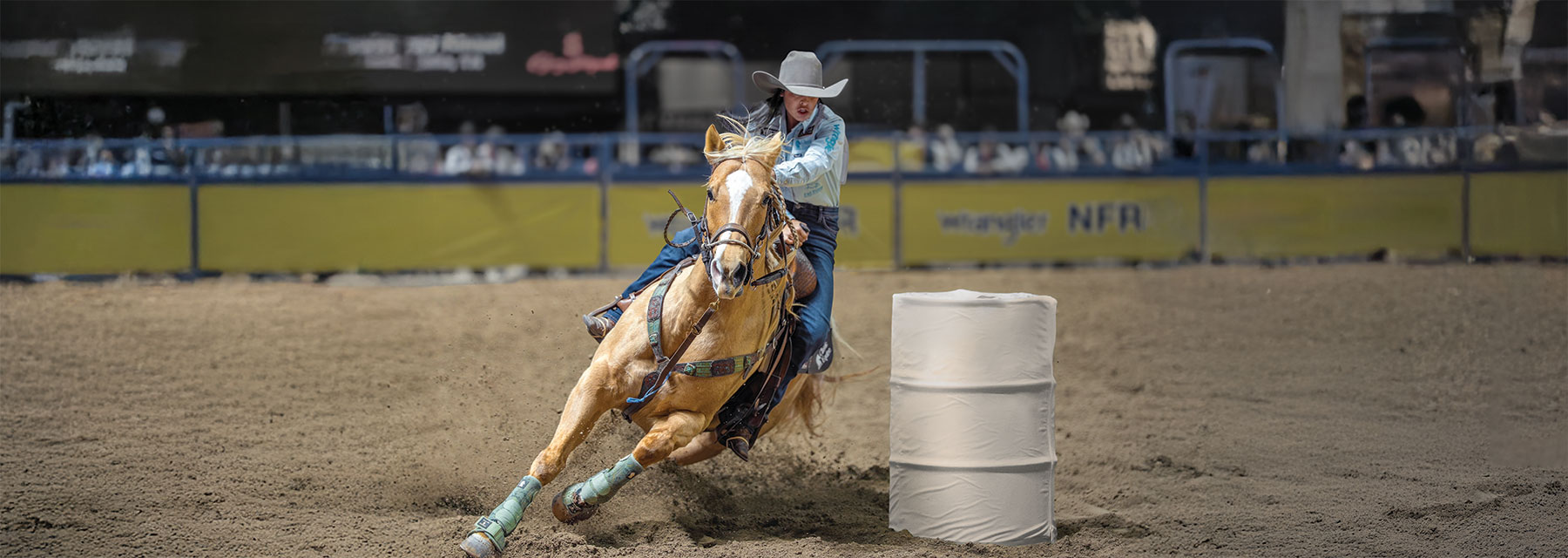
Riders and veterinarians would move mountains for a singular golden ticket that builds equine athletes with staying power, but really, it’s a combination of factors that converge together for real results. “It’s so many different ingredients,” agrees Dr. Durham. “When you’re around a rider who truly gets it right, it’s so clear. One of those for me is Hailey Kinsel,” he says about the four-time World Champion Barrel Racer and pilot of famed 2011 palomino mare Sister (DM Sissy Hayday). “I’m so impressed by her,” he continues. “She’s obviously a tremendous athlete, so already worthy of respect. But when I heard her speak, the thoughtfulness that she puts into the care of that horse is remarkable.”
“With a very intense sport like barrel racing, that horse has to be in a heightened state of readiness when it’s time to go, but that level of adrenaline isn’t sustainable 24 hours a day or seven days per week. Hailey has a way of managing Sister’s schedule that I admire. Sister knows when it’s time to go, and she knows when she’s done and it’s time to relax and recover.”
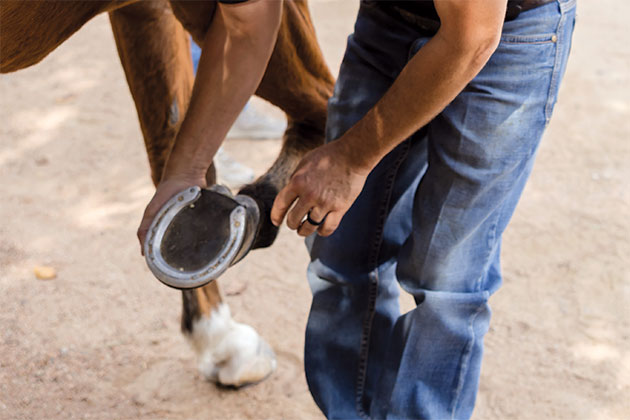
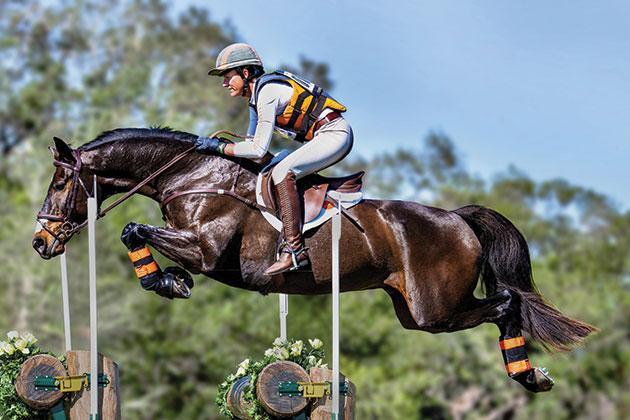
Behind every successful horse is a dedicated team considering conditioning, advanced nutrition, farriery and veterinary care.
PHOTO BY SHANNON BRINKMAN
Behind every successful horse is a dedicated team considering conditioning, advanced nutrition, farriery and veterinary care.
PHOTO BY SHANNON BRINKMAN
Along with a reimagined look at proper conditioning, advanced nutrition, farriery and veterinary care, there are more obscure aspects that affect performance without most riders realizing it. “Horses can’t achieve restorative Rapid Eye Movement (REM) sleep standing up,” explains Dr. Durham of an often-underappreciated component to equine wellness. “When we look at a big warmblood in a show environment, they’re in a 10 by 10 stall, the lights are on, the braiders are moving around and the music is playing all night. How are they supposed to compete effectively tomorrow when they’re up and alert all night? They’re exhausted come show time. It doesn’t make a lot of sense. Part of optimizing athletic performance is understanding some of these nuances that really do matter but often go overlooked.”
Luckily, technology by way of wearables and app-based systems are here to help the care team, offering valuable insights to veterinarians, farriers, body workers and other critical providers as to a horse’s fitness, health and preparedness for competition. “We need to establish what is normal for that horse’s baseline,” adds Dr. Contino of the importance of more frequent exams. “Then, we’re able to recognize what’s abnormal. We know when something changes, and we can pick it up sooner.”
Ultimately, behind every successful horse in the ring is a dedicated team of people whose expertise and commitment help garner long-term results, and they all want the same thing. “These horses need their whole team. They need us ticking all those boxes and hitting on all cylinders consistently, so they can maintain at their highest level for longer while being comfortable and happy doing so,” says Dr. Durham.
Sports medicine practitioners have certainly recognized with time and science that attaining longevity is a package deal with numerous components: more frequent preventive veterinary care; a mindful training schedule (not overtraining); a focused approach to nutrition; a strong working relationship between the veterinarian and farrier; and a care team that’s fully in tune with the horse’s cues. “If we approach this like a cookbook, we’re going to be ok. But if we want a horse to really thrive in terms of their athletic ability and longevity, we need to pay attention to all the little details. They all add up,” he adds. “Horses want to do their job. They’re good at pleasing us. They’ll do their job with bad shoeing, bad nutrition and with not much attention paid to these important factors. But, they won’t do it as well or for as long.”
The key message is this: it’s up to us as riders, grooms, veterinarians, farriers and so on to be constantly in pursuit of a better way to support our equine athletes in the jobs we’re asking them to do. High-level performance requires high-level input, and the tools, veterinary science, nutrition and technology are, now more than ever, right at our fingertips.
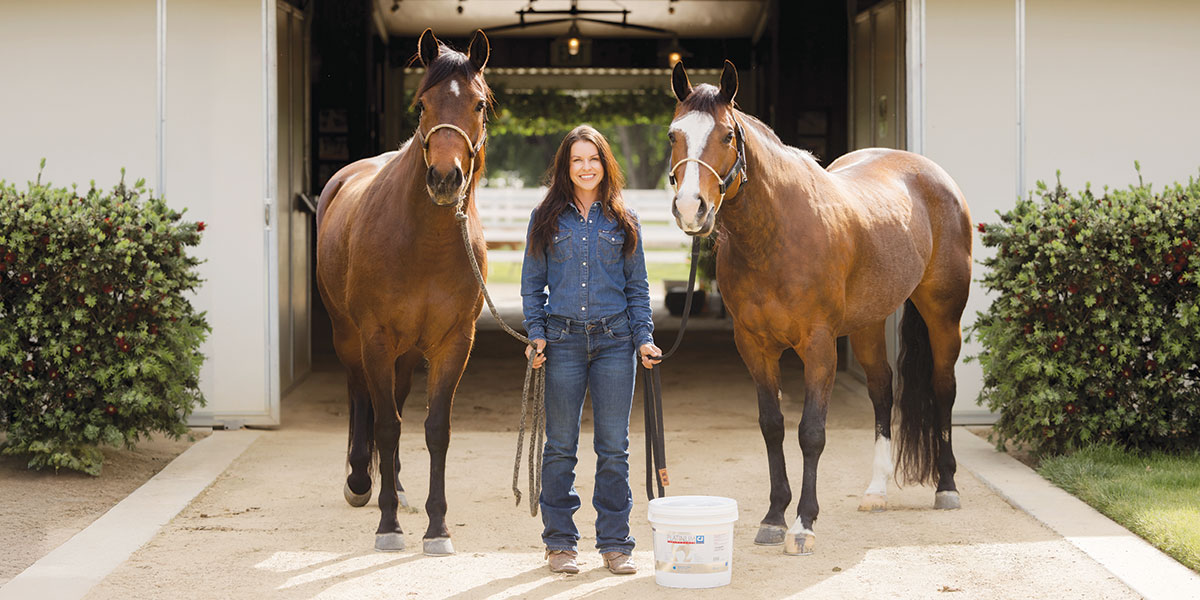
Four-time World Champion Barrel Racer Hailey Kinsel supports her string of equine athletes with Platinum Performance® CJ for overall wellness and for targeted support she uses Healthy Weight, Platinum Balance®, Platinum Gastric Support®, Platinum Longevity® and Platinum Renew®.

Subscribe to the Platinum Podcast
Equipping The Ultimate Equine Athlete
Hear more from Platinum Performance on supporting equine athletes with advanced nutrition, preventive care and training strategies designed to help horses perform and recover at their best.
Listen NowRequest Platinum Magazine
Read inspiring stories of success, companionship and collaboration
At Platinum Performance, we love to showcase the success of our clients, their horses and the veterinarians that care for them. All issues of Platinum Magazine are complimentary.