By
Taylor Czesnik
![]()
, Platinum Performance®

Taylor Czesnik,
Platinum Performance®
Taylor Czesnik’s passion for horses runs cell deep. A competitive equestrian since early childhood, Taylor is an accomplished hunter/jumper rider in her own right. She earned a degree in Equestrian Studies from Vermont Intermont College prior to becoming a manager and rider for top-level hunter/jumper and equitation trainers on the East Coast and in Florida for over 8 years. Her experience in equine nutrition spans nearly a decade, and Taylor today melds her love of riding and competing with her drive to impact the health and performance of horses through nutrition.
Convenience of Flying, Desirable Bloodlines and a Favorable Exchange Rate are Driving an Increase in Popularity of Importing Horses
Now more than ever, one can find a horse with a passport in just about any barn or horse show venue in the United States. The convenience of flying horses from other countries, desirable equine bloodline availability and a currency exchange rate generally working in Americans’ favor are among many reasons for the increase in popularity of imports. According to the Observatory of Economic Complexity, an online data visualization and distribution platform with a focus on the geography and dynamics of economic activities, the United States imported $817 million worth of horses in 2024, the most current numbers available. More than eight of 10 horse imports come from Europe, led by Germany, accounting for $267 million, or nearly 33% of equines; Ireland (15%, $123 million); the United Kingdom (12.2%, $99.5 million); the Netherlands (12.1%, $98.7 million); and Belgium (9.4%, $77 million).
Buyers land from their flights abroad, saddle in hand and eager to run from stable to stable in search of the next prospect. Most purchasing adventures are ripe with excitement, as foreign sale barns offer plenty of young prospects to see and ride. Once you’ve picked and purchased your dream horse, bringing it home adds another layer of complexity to the adventure.
Prior to arranging transport for your new horse, you’ll need to know the most recent transportation and quarantine requirements of the U.S. Department of Agriculture (USDA), which regulates the importation of equines and their hybrids into the U.S. Regulations vary from the country of import and can all be found on a USDA website. All horses entering the United States must undergo a quarantine period in a USDA quarantine facility of just days to eight weeks: three days (Germany, Ireland, the UK); one week (Bolivia, Bahrain, Saudi Arabia); or 60 days, from countries that are considered to be affected with African Horse Sickness (Angola, Democratic Republic of Congo, Oman). Horses imported from Canada generally do not require quarantine.
U.S. Imports $817 Million Worth of Horses in 2024
- Germany:
33%, $267 million - Ireland:
15%, $123 million - United Kingdom:
12.2%, $99.5 million - The Netherlands:
12.1%, $98.7 million - Belgium:
9.4%, $77 million
— Observatory of Economic Complexity
Immediate Post-Arrival Care
When your horse has been cleared and released from the quarantine facility, it will embark on its last leg of the journey from sales barn to home farm. Providing a quiet, safe environment upon its arrival is key to helping your horse settle into their new home. It is in good practice to give the animal a thorough examination once they have settled in, as it is common for horses to obtain a bump here or scratch there while en route. Extensive travel can be taxing on horses. Adding extra bedding to the animal’s stall encourages your horse to feel comfortable enough to rest; often, they are quick to take advantage of a nicely bedded stall after long travel. In the days following, your horse will benefit from routine and consistency as it adjusts to its new home.
Environmental Changes
An imported horse faces a world of changes — many of which are environmental — starting from the moment they land, enter the quarantine facility, to the time they arrive at your farm. These changes come in many forms, from the water they drink, to the grass in turnout, the forage they eat, even pollen in the air. Look out for allergic reactions to these environmental changes that can appear as skin issues, hives or respiratory issues. For example, the change in bedding may cause hives on an imported horse. Skin or respiratory issues may occur from pollen or insects that your new horse has not become acclimated to yet. Southern climates, like those found in Florida, have weather and foliage much different than that experienced in European Union countries. If you know that your climate is drastically different than where your horse has originated, start them on a supplement to support seasonal allergies. Platinum Skin & Allergy in addition to a Platinum foundation formula, such as Platinum Performance® GI or Platinum Performance® DJ, is a great way to help keep their immune system strong while they navigate their new world.
Hydration
Some horses take a while to adjust to the taste of new water, so make sure that water buckets are freshly cleaned and filled to help encourage drinking. Bucket cleanliness is important because fresh imports are more susceptible to illness in their new environment, so any bacteria left behind from previous equine occupants have the potential to make your new horse sick. Providing access to a salt block in the horse’s stall can help encourage hydration.
Climate
Weather can play a huge part in a successful transition. If your horse is used to a cooler European or Canadian climate and arrives midsummer in North Carolina, you’ll need to ensure it has everything needed to regulate its body temperature. Provide a stall fan, plenty of shade in turnout and ample water and electrolytes, such as Platinum Electrolyte. On the other hand, if you are importing midwinter to the Northeast and your horse originates from a country, such as Mexico, make sure appropriate blankets are available to ensure your horse stays warm and does not lose weight as it adjusts to the temperature change.
If your horse has come from a limited availability of fresh grass, you’ll need to start slow. If you have a dirt paddock or round pen, allow your horse extra outside time and hand graze them for the first few days of the transition.
Turnout
Adequate turnout is one thing that many U.S. farms have that is not always as prevalent in other countries. Some American facilities have vast, lush pastures, while others may have limited dirt turnouts. Transitioning the new horse to your paddocks can be tricky.
The biggest concern is to keep your new arrival safe in their space. It is always a good practice to show your new horse the fence line, especially if your farm fencing includes non-visible electric fencing options; don’t assume your horse has experience with the type of fencing you have.
The type of turnout your horse was accustomed to and the type of turnout on your farm will significantly impact the time it takes to transition your horse to its new paddock. If your horse has come from a limited availability of fresh grass, you’ll need to start slow.
- Generally, start with short periods of grass a day, around 15-30 minutes, and gradually increase that time by the same amount each day over the next few weeks until you reach your desired amount of turnout time.
- If you have a dirt paddock or round pen, allow your horse extra outside time and hand graze them for the first few days of the transition while the time of grass availability is short. This can also help your horse adjust to its new surroundings without having too much room to run and potentially injure itself.
- Avoid the hours when sugars in the grass are highest; stick to early mornings or late evenings. When you are able to turn out your horse longer, a grazing muzzle can ease your concerns about how they will handle the increase but still limit the amount of grass intake.
Monitor their manure during the transition, as just about everything they ingest will be new. An extra 30 minutes of fresh grass may be enough to trigger digestive upset in your new horse, and you may have to take them back down a few minutes until their gastrointestinal tracts adjust, then increase the time again. Something that is always good to have on hand to help clear up intestinal disturbance is Bio-Sponge®, in either tube or powder form, a supplement made from a natural clay mineral, to support healthy gastrointestinal function by binding to unwanted compounds known for causing occasional diarrhea.
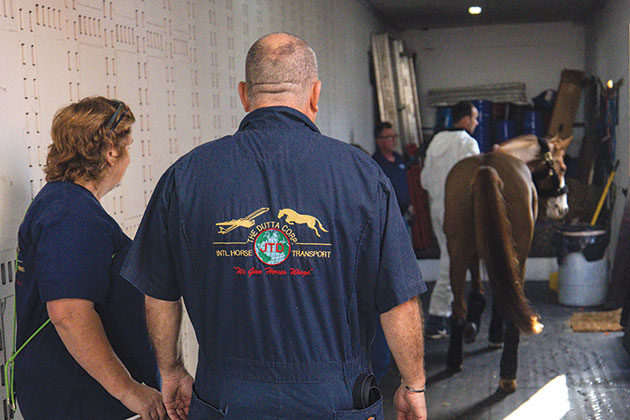
Upon arrival to their final destination, horses are evaluated by the international transport company's staff and a veterinarian. The Dutta Corp. staff is seen here with a horse in transit.
COURTESY THE DUTTA CORP/PHOTO BY TAYLOR PENCE
Upon arrival to their final destination, horses are evaluated by the international transport company's staff and a veterinarian. The Dutta Corp. staff is seen here with a horse in transit.
COURTESY THE DUTTA CORP/PHOTO BY TAYLOR PENCE
“Bringing horses over from Europe is always a big transition. Having Platinum Performance® in their daily routine has been such an important piece in helping them acclimate smoothly. I can see and feel the difference in how quickly they settle, maintain condition and stay healthy through what can be a stressful period.”
— Caroline Pamukcu, 2024 Eventing Olympian
Nutrition
Dietary changes are inevitable. Hay options and quality vary greatly from country to country, as do grain types. If possible, use a grain similar to what they were eating at their old farm during the transition. Whether you find a similar grain or not, slow transitions are best to avoid digestive upset when changing your horse’s feed. Start small and build to a normal feed regimen over a few weeks’ time.
During this transition is a good time to get your horse started on a Platinum Performance® wellness formula to keep them nutritionally supported. Depending on your horse’s future workload and potential needs, there are options for added joint and gastrointestinal support. The four formulas are: Platinum Performance ® Equine, Platinum Performance® GI (gastrointestinal), Platinum Performance ® DJ (digestive + joint), and Platinum Performance® CJ (complete joint). You can start their supplement transition slowly as well. Begin with a quarter of a dose; after a few days, increase to a half of a dose and repeat until you’ve made it to the appropriate dosage for your horse’s size.
Caroline Pamukcu, a 2024 Olympian and Pan American Games individual gold medalist and silver team medalist, is no beginner to the ins and outs of transporting horses internationally. She and her team often import horses for training, sales and clients. This is not to mention the frequent travel necessary for competition. Over the years, the three-day eventer and her team have perfected their transition routine for newly imported horses.
“Bringing horses over from Europe is always a big transition — from the travel itself to adjusting to a new environment and training program,” said the Springtown, Pennsylvania, resident. “Having Platinum Performance® in their daily routine has been such an important piece in helping them acclimate smoothly. I can see and feel the difference in how quickly they settle, maintain condition, and stay healthy through what can be a stressful period. It gives me a lot of confidence knowing they have that support from day one of arriving at our farm.”
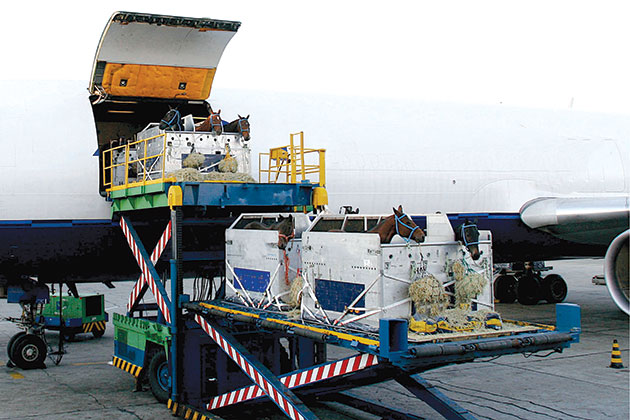
All horses entering the United States must undergo a quarantine period in a USDA quarantine facility of just days to eight weeks.
ISTOCKPHOTO.COM
All horses entering the United States must undergo a quarantine period in a USDA quarantine facility of just days to eight weeks.
ISTOCKPHOTO.COM
Work With Experts When Needed
Working with an equine nutritionist can ease your horse’s transition as you navigate grain, forage and turnout changes. Platinum Performance® has a knowledgeable team of equine nutritionists and advisors available to help answer any questions you may have. Whether you are concerned about your overall feeding program and complementing specific areas or you have an acute area of concern, Platinum Advisors can provide the insight you need to make informed decisions.
Trusting the Professionals
Your horse’s care team is vital in ensuring a safe, comfortable transition. Having your veterinarian assess your new horse within their first week will provide a baseline for the care team and provide an opportunity to ask any questions to assure a successful transition for the new arrival. Depending on whether your horse is stabled with you at home or with a trainer at another location, you need to be on the same page as your horse’s support team to aid in the transition to new feeds, turnout and returning your horse to work. Horses should gradually increase their workload as they settle in, and this is a good time for your trainer to get a good feel for your horse before you take the reins.
Working with an equine nutritionist can ease your horse’s transition as you navigate grain, forage and turnout changes. Platinum Performance® has a knowledgeable team of equine nutritionists and advisors available to help answer any questions you may have. Whether you are concerned about your overall feeding program and complementing specific areas or you have an acute area of concern about the horse, the Platinum Performance ® advisors can provide the insight you need to make informed decisions that align with the rest of your horse’s care team.
Importing a new horse can be an exciting and challenging endeavor. As we’ve seen, keeping in mind essential horse care safety measures, proper nutrition and staying in contact with your horse’s entire care team will help alleviate any unnecessary stressors and allow your new acquisition to transition to its new home, settle in as easily as possible and succeed in the job ahead.
Request Platinum Magazine
Read inspiring stories of success, companionship and collaboration
At Platinum Performance, we love to showcase the success of our clients, their horses and the veterinarians that care for them. All issues of Platinum Magazine are complimentary.