Strangles in Horses: Symptoms, Transmission and Prevention
A closer look at Streptococcus equi testing, treatment and barn biosecurity

PHOTOS BY ELIZABETH HAY PHOTOGRAPHY
Contributing Veterinarians

Nicola Pusterla,
DVM, PhD, DACVIM, DAVDC-EQ
University of California, Davis

Ashley Boyle,
DVM, DACVIM
University of Pennsylvania

Sally DeNotta,
DVM, PhD, DACVIM
University of Florida
Quick Answer
What is strangles in horses?
Strangles is a contagious bacterial infection of a horse’s upper respiratory tract caused by Streptococcus equi. It can spread through contact with infected horses, including carriers without obvious symptoms, and through contaminated equipment or surfaces. Signs can include fever, nasal discharge, and swollen lymph nodes.
In this article you'll learn:
- ✓What signs strangles can cause in horses
- ✓How Strep equi spreads, including silent carriers
- ✓How veterinarians test and manage cases
- ✓What barn biosecurity practices help contain an outbreak
What is Strangles in Horses?
The threat of strangles often leaves both riders and veterinarians understandably overcome with dread. This bacterial disease of the equine upper respiratory tract gets its name because swollen lymph nodes can press on the animal’s airway resulting in an unsettling harsh, choking sound. It occurs worldwide — the most common infectious agent in horses 6 to 10 years of age — and is exceedingly contagious and difficult to contain within a barn or close-quarters atmosphere.
“Strangles is contracted by horses from close contact with other horses or with fomites (inanimate objects or surfaces) contaminated by Streptococcus equi, subspecies equi (or Strep equi) bacteria,” explains Ashley Boyle, an equine veterinarian, board-certified internal medicine specialist and professor of medicine at the University of Pennsylvania’s School of Veterinary Medicine. She was a key figure in authoring the revised, updated consensus statement on strangles published in February 2018 by the American College of Veterinary Internal Medicine (ACVIM) and is regarded as an authority figure on the disease.
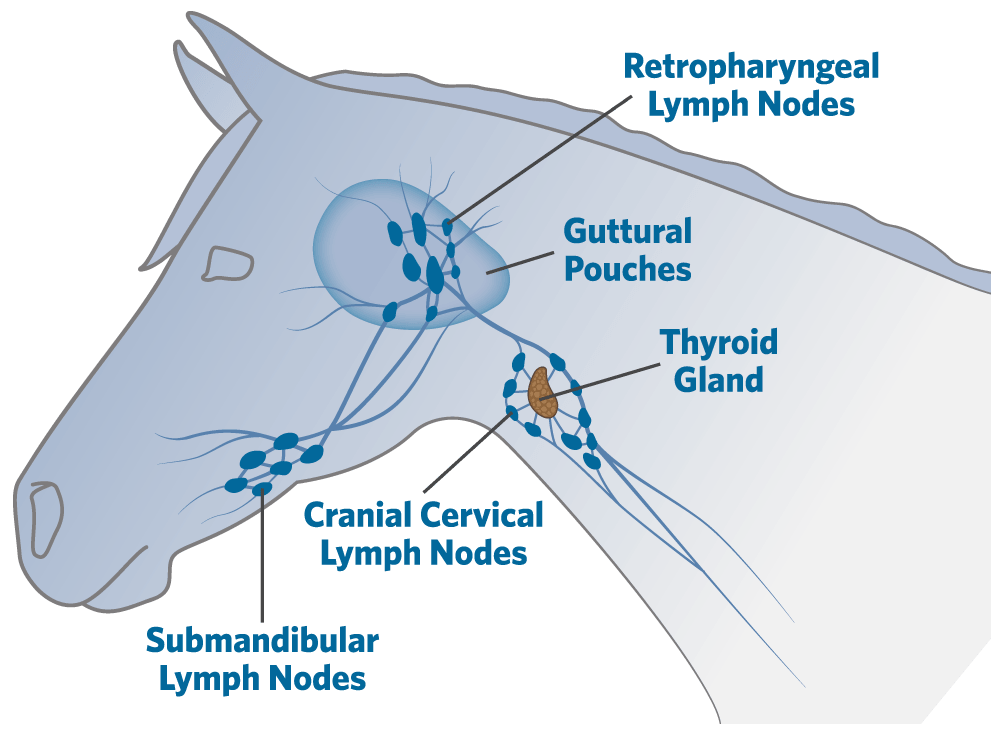
“Strep equi infects the pharyngeal lymph nodes in the back of the throat and proceeds into the lymph nodes in the head and neck region, the retropharyngeal lymph nodes in particular (found behind the mandible at the throat),” she continues, describing the distinct path of the disease. “It can also affect the submandibular lymph nodes (under the jaw).”
This disease can often, but not always, result in nasal discharge, a high fever, swelling of affected lymph nodes and telltale abscesses in the region. “There can be a variety of presentations depending on the case,” Dr. Boyle emphasizes, driving home that symptoms vary due to each horse’s unique immune response. “In most horses, Strep equi is an upper respiratory disease, but we can rarely see horses that are more affected and develop pneumonia, meaning the disease progresses into the lungs. This most commonly occurs due to aspiration of the discharge from the upper respiratory tract,” she details.
When present in the retropharyngeal lymph node, Strep equi can erupt into the guttural pouches, air-filled sacs in the throatlatch region that connect to the middle ear, where it can easily go undetected for longer periods. “Although rare, it can spread throughout the body, known as metastatic strangles or bastard strangles,” she adds. With metastatic strangles, abscesses develop in other parts of the body, most commonly in the lymph nodes associated with the gastrointestinal (GI) tract.
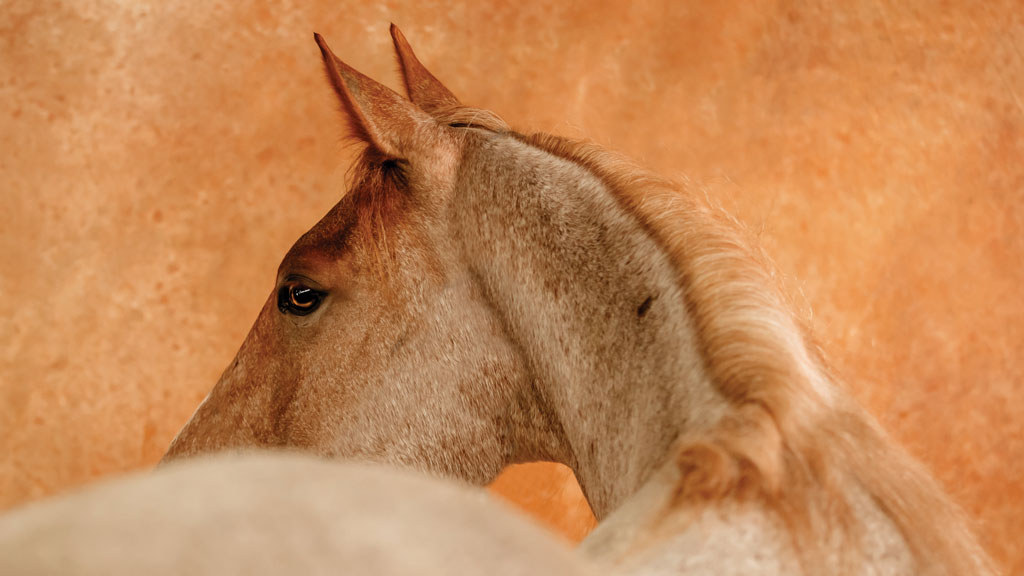
“Strep equi infects the pharyngeal lymph nodes in the back of the throat and proceeds into the lymph nodes in the head and neck region, the retropharyngeal lymph nodes in particular. It can also affect the submandibular lymph nodes (under the jaw).”
Science Explained
— Ashley Boyle, DVM, DACVIM
University of Pennsylvania
Get to Know Streptococcus equi
What is Strangles?
Strangles is contracted by horses from close contact with other horses or inanimate objects or surfaces that have been contaminated by Streptococcus equi.
How is Strangles spread?
Strep equi is highly contagious. It can be spread through direct contact with nasal discharge, or pus, of an infected horse. Horse-to-horse transmission through an asymptomatic carrier is also a possibility. Asymptomatic carriers can harbor pus or chondroids (firm, pebble-like accumulations of dried or congealed pus wrought with active, replicating bacteria) in their guttural pouches for extended periods. Indirect contact from fomites or people is another way the disease is spread. In the right cool, moist conditions, Strep equi has been shown to survive up to six weeks. Good barn hygiene is crucial.
How can the spread be prevented?
Asymptomatic carriers are a prime example of why horses purchased at a sale or sourced from unfamiliar locations should be tested for Strep equi before entering their new facility. When traveling, limit your horse from comingling with other horses or from using shared water sources.
How is Strep equi tested?
The veterinarian will take a nasal swab, submit it for culture or polymerase chain reaction (PCR). Culture testing is regarded as old fashioned since they can give false negative results if there is an overgrowth of another Strep organism that isn’t Strep equi. The diagnostic field has moved toward PCR tests for more accurate results relying on the detection of specific genes. PCR is significantly more sensitive, but it can not determine if the organism is viable, which cultures can.
Is there a Strep equi vaccine?
Yes. There are two Strep equi vaccines available in the United States. They are made with the Strep equi M-protein.
How Strangles Affects Horses
This condition affects a horse’s upper airway, specifically the retropharyngeal lymph nodes, cranial cervical lymph nodes, submandibular lymph nodes and guttural pouches.
©2026 PLATINUM PERFORMANCE, INC./TOPLINE DESIGN
How Strangles Spreads Between Horses
Another fear accompanying Strep equi is its highly contagious nature and an ability to rapidly spread through barns. But how exactly is it transmitted from horse to horse, and what’s happening at the various stages of this disease to make it particularly contagious? “Strangles is the gift one horse gives to the other, sadly,” says Sally DeNotta, an equine veterinarian, board-certified internal medicine specialist and biosecurity expert at the University of Florida’s College of Veterinary Medicine in Gainesville. “There are three main scenarios in which this happens,” she says. “The first is through direct contact with nasal discharge, or pus, resulting in infection.
In this more straight-forward scenario, a sick horse with active Strep equi has either nasal discharge or a draining retropharyngeal or submandibular abscess, and another horse comes along and sniffs him or comes into contact with him and gets infected via that route.” The second opportunity for horse-to-horse transmission is through an asymptomatic carrier. “For reasons that are not totally understood, a horse can harbor a Strep equi infection in their guttural pouches chronically, and these horses are the so-called ‘Typhoid Mary’ of a strangles outbreak,” Dr. DeNotta explains.
Asymptomatic carriers can harbor pus or chondroids (firm, pebble-like accumulations of dried or congealed pus wrought with active, replicating bacteria) in their guttural pouches for extended periods. “These horses may have no clinical signs at all, but periodically can have low-grade fevers and nasal discharge,” she cautions. “During these periods of shedding, they can act as potential sources of infection for other horses.” This is particularly concerning for riders because of the phantom presence of the disease looming undetected, spreading to other horses in a barn or close quarters before “patient zero” is identified.
Asymptomatic carriers are a prime example of why horses purchased at a sale or sourced from unfamiliar locations should be tested for Strep equi before entering their new facility.
“The third scenario is through indirect contact from fomites or people,” continues Dr. DeNotta. “Strep equi doesn’t exist terribly well in the environment, especially not in the sun. Sunlight is pretty good at killing this bacterium within 24 hours, but in the right cool, moist conditions, it has been shown to be tenacious and survive up to six weeks.” It’s for this reason that she advocates good barn hygiene regardless of a known infection but especially when a sick horse has been identified.
“Strep equi can live for long periods of time on nose rags, grooming supplies, tack, clothing, stalls, in water troughs and on the gloves or hands of people moving between stalls and horses.”
In contrast to pigeon fever (or dryland distemper), which is caused by the bacteria Corynebacterium pseudotuberculosis and results in painful chest swellings that make a horse look pigeon-breasted, Strep equi does not spread through flies or infected soil and, although possible in less frequent cases, does not typically involve internal abscesses in areas beyond the head and neck or external abscesses in the chest and belly region of the horse.
“Strep equi is not considered an environmental pathogen,” Dr. DeNotta reminds, highlighting the key differences between the two conditions that both involve abscesses caused by pathogenic bacteria, albeit very different species.
“(Asymptomatic carriers) may have no clinical signs at all, but periodically can have low-grade fevers and nasal discharge. During these periods of shedding, they can act as potential sources of infection for other horses.”
Veterinarian's Perspective
— Sally DeNotta, DVM, PhD, DACVIM
University of Florida
Surveillance and Testing for Strangles
Horse owners and veterinarians are equally discouraged by the prospect of an outbreak. “Amongst all respiratory pathogens, Strep equi is really the one that gives you a headache,” says Nicola Pusterla, an equine veterinarian board-certified in both internal medicine and dentistry, and a professor of medicine and epidemiology at the University of California, Davis. “That’s mainly because of the longevity of the bacteria. Once it’s there, it’s going to persist for quite some time.” While Strep equi exhibits standard clinical signs, not every horse that contracts the disease will express it in the same way.
“Amongst all respiratory pathogens, Strep equi is really the one that gives you a headache. That’s mainly because of the longevity of the bacteria. Once it’s there, it’s going to persist for quite some time.”Veterinarian's Perspective
— Nicola Pusterla, DVM, PhD, DACVIM, DAVDC-EQ
University of California, Davis
“If you look at the textbook, you’ll see fever, upper respiratory signs, nasal secretions, lymph nodes as big as a baseball, and anyone could figure out in a second that this is Strep equi,” he explains. “The reality is, if we look at older horses that have previously either experienced a natural Strep equi infection or have been vaccinated, disease expression is different. It’s milder, and you’re chasing something that’s not as obvious. Perhaps the horse is febrile (presenting with a fever steadily or intermittently), maybe the horse has a little bit of a snotty nose.
The veterinarian will take a nasal swab, submit it for culture or PCR (polymerase chain reaction) for the detection of S. equi and the results may come back negative. Then, 10 days later, the horse has enlarged, swollen lymph nodes that are draining.” Strep equi can be a wild card depending on the case. “The accuracy of the detection depends a lot on disease stage and the biological sample collected,” he points out.
The goal is to diagnose it as quickly and accurately as possible, so the horse can be appropriately treated and isolated to limit exposure to other horses. Choosing which diagnostic method is the most appropriate and accurate is subject to debate. “The deeper within the respiratory apparatus, the better,” Dr. Pusterla suggests as his general rule is to collect the most sensitive sample.
“Nasal secretions collected with a 6-inch swab are not as sensitive or as accurate in detecting Strep equi as a deeper biological sample collected at the level of the nasal pharynx or, even better, a guttural pouch lavage,” he says.
The debate is seen here: When a clinically affected horse presents with typical signs, many veterinarians consider nasal secretions to be an adequate biological sample and can be tested two ways. The first is testing conventionally through a culture, which is regarded as old fashioned since they can give false negative results if there is an overgrowth of another Strep organism that isn’t Strep equi.
“Also, a false negative can appear if the horse has been on antimicrobials or biological inhibitors are present in the nasal secretions,” Dr. Pusterla adds, highlighting why the diagnostic field has moved toward PCR tests for more accurate results relying on the detection of specific genes. “PCR is significantly more sensitive, but its shortcoming is that it won’t tell you if the organism is viable, which a culture will do,” he explains.
Further complicating the diagnosis is when a sample returns a negative culture but a positive PCR result. What then? “In that case, we encounter different opinions,” says Dr. Pusterla of debate within the industry. “Some will say, ‘Strep equi is clearly there.’ To me, if Strep equi is detected on PCR, which does not necessarily indicate viability, it is still a concern, especially if the horse has clinical signs. At least, isolate the horse and repeat the testing. Two tests are better than one, three are better than two, and so on. There is power in repeating testing,” he insists. Work is ongoing to address a chief complaint of veterinarians, which is a positive PCR result with no sufficient way to prove viability.
“We’d love to be able to say, ‘Here’s a positive result by PCR, but don’t worry about it because what we’re detecting is only the DNA of the organism, not the viable bacterial organism,’ ” says Dr. Pusterla of the work Penn Vet’s Dr. Boyle and others are leading to help differentiate horses that are likely to be contagious versus those who aren’t.
Strangles occurs worldwide, and is the most common infectious agent in horses 6 to 10 years old.
Dr. Pusterla, along with several colleagues, is part of the Equine Respiratory Biosurveillance Program where he collects information from horses exhibiting acute onset of fever and respiratory signs monthly. “This truly applies to a variety of respiratory infectious diseases, including equine influenza virus, EHV-1 and EHV-4 (equine herpes virus), rhinitis virus A and B, as well as Strep equi.” Thanks to work like this, there has been a shift over the past decade in the predominant viral pathogens identified in horses. In the past, EHV-4 and equine influenza virus led as the two most frequent equine respiratory infections.
Now, however, Strep equi has taken over as the leading pathogen detected in horses with respiratory signs. “Strep equi affects all age groups, and it is detected year-round,” he explains. “There’s not necessarily a seasonal rise in cases during the colder months of the year as there is for EHV-4 and equine influenza virus.” With cases on the rise, the question becomes, why? “I believe one of the reasons we’re seeing increased cases of Strep equi is because we do a very poor job of eliminating silent carriers,” he says matter-of-factly.
Subclinically-infected horses that go untested because of their lack of clinical signs, allowing them to infect other horses long before silent carriers are ever diagnosed — if ever. Perhaps the reason that more preventive screening for Strep equi is not standard practice is because routine testing is both cumbersome and not without cost.
“We simply don’t screen, and screening is essential to capture and identify these horses and to eliminate the organism in their guttural pouch,” Dr. Pusterla says. To do that, the ACVIM consensus statement recommends a guttural pouch lavage or multiple nasopharyngeal washes. Regarding the latter, Dr. Pusterla has refined his testing method with a trick for greater efficiency by performing three nasopharyngeal washes.
“When we’re trying to eliminate the threat of shedding, we’re not taking only one sample. We take multiple samples with time in between,” he reiterates. “Generally, that’s seven days, but the interval could be shorter if needed.” He then holds onto that sample until his next two are complete, refrigerating each until the final sample is collected, so he can ship all to the lab as a single pooled sample. “If the test is negative, excellent. You now have three negative samples.
If it’s positive — and it doesn’t matter which of the three samples is positive — you then need to scope the horse.” He recognizes that even nasopharyngeal washes are cumbersome, with some horses requiring sedation. Because of this and the difficulty with most current testing methods, he and his colleagues are exploring less-complicated and expensive test methods that would allow the horse owner to collect multiple samples via nasal swabs or from the horse’s stall environment.
That work continues with the hope of one day (soon) developing protocols that provide easier access to more wide-scale testing, to reduce the number of silent carriers that are missed until an outbreak arises. “With proper protocols, and maybe some encouragement and alternate techniques, we could reduce the rate of Strep equi by identifying and isolating silent carriers,” Dr. Pusterla says. “We can do better in this regard.”
An Inside Look at Equine Strangles
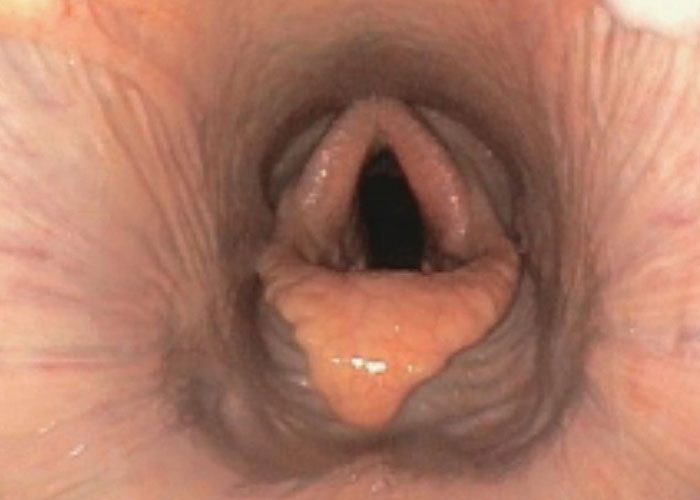
Upper airway endoscopy — purulent drainage from the left guttural pouch.
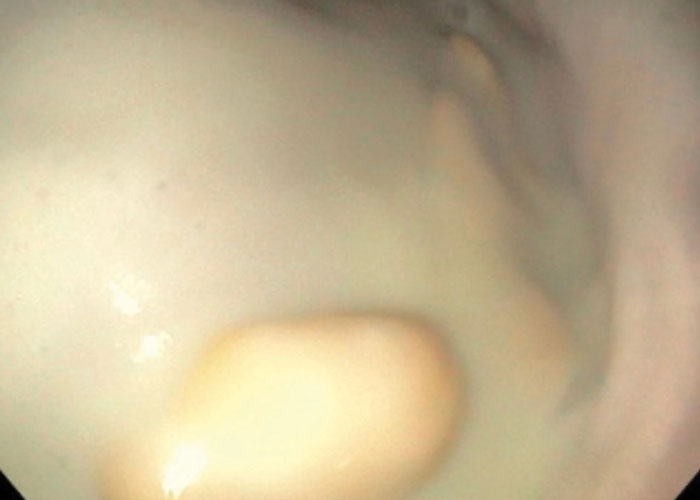
Guttural pouch endoscopy — insipissated pus (chondroids) within purulent discharge.
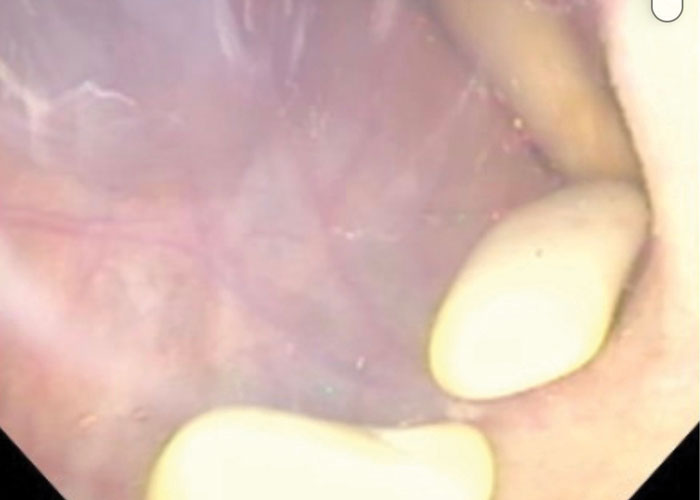
Chondroids within the guttural pouch during a saline lavage of the pouch.

Endoscopic removal of chondroids from within the guttural pouch.
PHOTOS COURTESY OF ALAMO PINTADO EQUINE MEDICAL CENTER
Treatment and Vaccination
Once Strep equi is identified, the question becomes, what is the appropriate treatment method and when? “It is very important to open these swellings when they’re ready and not before,” explains Dr. Boyle of proper protocol for lancing the abscesses that can often accompany an infection. “You don’t want to lance a deep abscess because you can end up with a secondary bacterial infection or cellulitis surrounding that area,” she cautions. Veterinarians use warm compresses (hot packing) to increase local blood flow, ease pain and help purulent exudate, or pus, move to the surface so the abscess can be drained.
Ultrasound can also be used to identify deep abscesses before they’re visually obvious, but with a well-known caveat: “We try not to use our ultrasounds on Strep equi cases, as to avoid contaminating the equipment,” advises Dr. Boyle, whose research interests include infectious disease and the testing methods associated with disease to help improve herd management. Regardless, the abscesses must be allowed sufficient time to come close enough to the surface where they can be lanced and drained into a vessel that prevents the infected pus from contaminating the surrounding area.
The process isn’t pretty, but it’s controlled and can cut the risk that further Strep equi bacteria taints the paddock, barn, stall or treatment room environment. Exceptions to the rule exist, however, and lancing an abscess while it’s still relatively deep are done if it causes an airway obstruction or other complications.
In addition to carefully timed lancing, use of antimicrobials (antibiotics) is subject to debate as well. “In the ACVIM consensus statement, we recommend using antibiotics in horses that are having complications, and that can be quite a variety of horses,” Dr. Boyle explains. “This includes a horse that is febrile for many days, and we’re having trouble controlling those fevers with non-steroidals like flunixin (Banamine) or phenylbutazone (Bute). The horse may not be eating or drinking due to the fever. Think of it as similar to a human with a severe sore throat,” she offers.
The disadvantage of using antibiotics too early is seen when an abscess has not been lanced or has not come to a head and opened. “In that case, the use of antibiotics can prolong the process,” Dr. Boyle says.
Antibiotics also come into play when there are complications, such as bastard strangles. This scenario involves a horse that has either had active infection or has been in an outbreak environment but is not showing symptoms. Affected equines can experience internal abscesses that emerge in other parts of the body not commonly associated with Strep equi.
“A month or two after the initial outbreak, horses with bastard strangles can experience a fever, and we have to go on a hunt to find where that fever is coming from. At that point, it may be due to an abscess in the abdominal cavity, for instance.
Those horses need a longer course of antibiotics because we often can’t access the abscess to drain it,” she details.
Although unusual, veterinarians remain mindful of the potential of purpura hemorrhagica (PH), a severe immune-mediated complication triggering blood vessel inflammation and caused by Strep equi exposure or Strep equi vaccination. “The horse’s immune system goes crazy secondary to Strep equi,” says Dr. Boyle. “If they have a hyperexcitable immune system that is already primed for the disease, then they’re exposed to the Strep equi vaccine, PH can happen, albeit rarely. It can also happen in the face of an outbreak if the horse is perhaps experiencing exposure for the second time.
The immune system — unbeknownst to the owner — is already primed to react.” Antibiotics and steroids will typically be used to help calm the immune system. Both of the Strep equi vaccines available in the United States are made with the Strep equi M-protein. It’s that protein on the surface of the Strep equi bacteria that can cause a PH complication.
Thus, certain experts advise that an SeM titer test (Strep equi M-protein) — a blood test that measures antibodies against Strep equi, essentially looking for a reaction to the SeM protein — be administered prior to vaccination. “We also do not recommend vaccinating in the face of an outbreak,” Dr. Boyle cautions.
“And that’s because of the risk of a hypersensitivity or purpura hemorrhagica.” While non-SeM vaccines are newly on the market in Europe, they have yet to be introduced in the U.S.
Biosecurity During a Strangles Outbreak
Managing an active outbreak, or even an isolated case, is challenging at best. It’s a weekslong journey requiring horses be isolated, properties be closed to outside horses and visitors, and strict biosecurity measures put in place to prevent additional spread. “It’s because of these incredibly time consuming and difficult practices that we try to prevent spread in the first place, so that one infected barn doesn’t turn into multiple infected barns,” encourages Dr. DeNotta, originally from the rural Oregon coast, who spent time in private practice in Oregon and Colorado before completing an internal medicine residency and doctorate at Cornell University.
“As Dr. Pusterla pointed out, we really need to double down on trying to identify and eliminate these asymptomatic carriers that are responsible for keeping this pathogen alive and spreading. But when we do identify a case at a particular facility, what do we do?”
First, it’s important to note that Strep equi is a reportable disease in all 50 states, meaning veterinarians and/or labs must report any positive cases to the state veterinary authority for mitigation and management in an effort to prevent a localized outbreak from becoming widespread. This usually also involves quarantining the facility, so no horses can travel on or off the farm for a certain amount of time.
Next, the goal is to minimize spread within the facility. “This will involve horses being separated and categorized into three groups using a color-coding system of green, yellow and red introduced by the previous Animal Health Trust in the U.K.,” Dr. DeNotta explains. “Green represents horses that have no clinical signs and no known direct or indirect exposure to the case at hand. These horses are housed and quarantined somewhere separately at the affected facility and monitored for visual signs of disease twice daily. The yellow (or amber) group includes seemingly healthy horses with no clinical signs, but they may have been exposed either directly or indirectly through fomites or handling and may contract the infection. Red cases are obviously the highest level and are actively infected. They will go through the course of their infection with or without specific supportive care treatments and management, as Dr. Boyle mentioned. A lot of these cases are handled only with supportive care for symptoms, such as anti-inflammatories and things to make them more comfortable or to help their appetites improve. These cases may or may not be given antimicrobials, which could potentially prolong the course of the disease. The red group horses are going to be in isolation by themselves.” Once the horses are grouped and coded, they are monitored appropriately, especially the yellow, or high-risk group. “We’re monitoring temperatures twice daily with this group and looking for clinical signs,” she explains.
“If we can catch these horses when they first become febrile and isolate them before they’re shedding the bacteria nasally, that is a window where we might treat with an antimicrobial and stop infection before the horses develop (life-threatening) fulminant strangles with abscesses and guttural pouch disease.”
Prime culprits in the spread of the disease are people. Caretakers often unwittingly spread bacteria on hands, gloves, clothing, nose rags and by sharing tack and equipment. “It’s usually a handful of people taking care of the entire population of horses,” highlights Dr. DeNotta, whose clinical and research interests include infectious disease, neonatology, neurology, hemostatic therapies and colic.
“In a perfect world you’d have different staff taking care of each of the color-coded groups, but I realize that’s often not feasible.” When one group of caretakers tends to the entire horse population on an affected farm, green-coded horses should be cared for first, then yellow horses, and finally the red horses, with staff showering and changing clothing after any contact with infected horses.
There should be no sharing of equipment between groups, considering horses can be infected for up to six weeks with the long-living Strep equi bacteria. “It’s shocking how much cross contamination can happen in normal barn operations,” Dr. DeNotta observes.
Among the worst offenders are the seemingly innocuous nose rags that can be found strewn about barns across the country and seen tucked on the hip of nearly every groom at a show. “Burn the nose rags,” Dr. DeNotta sternly advises. She’s not kidding; they are bacterial super-spreaders. “I wouldn’t blow my nose and hand it to you. We shouldn’t be sharing nose rags between horses, just as we shouldn’t be sharing water troughs in public places,” she insists.
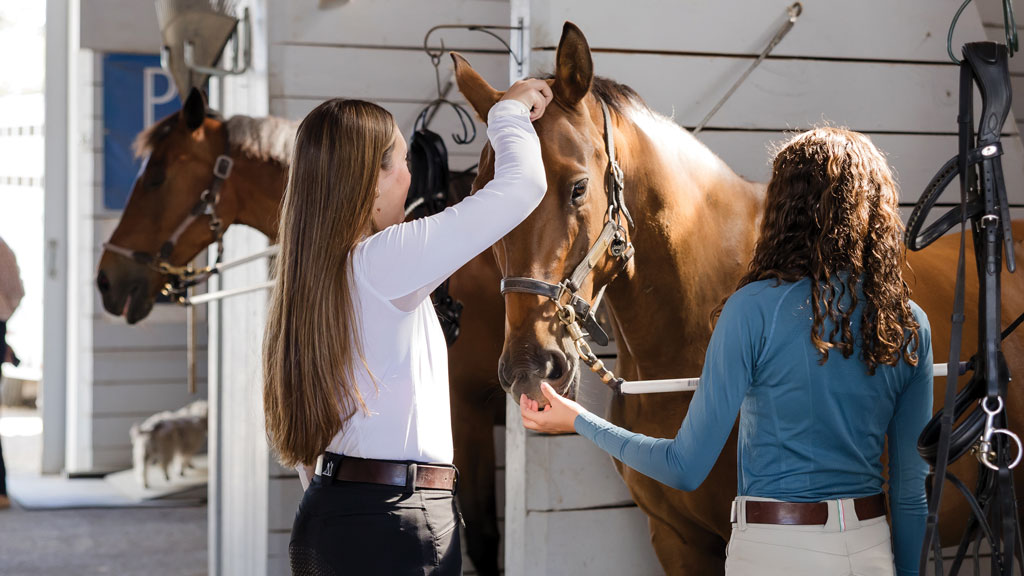
When horses travel, avoid allowing horses to comingle by rubbing noses or sharing public water troughs or nose rags to help protect horses from S. Equi.
Containing the Spread of Strangles
Strep equi reigns as one of the least enjoyable experiences a horse owner (and veterinarian) can deal with. UC Davis’s Dr. Pusterla, however, encourages veterinarians to rely on their expert colleagues and reach out for support on cases. “You’re not alone in this; there are plenty of resources,” he says. “Reach out to people that deal with this condition regularly. We have a lot of experience in the field, and we’re happy to help.”
Horse owners are undoubtedly the first line of defense in preventing any outbreaks, with their observational skills being critical. Recognizing the early signs of infection, like fever and head and neck swelling, can help get veterinary care and biosecurity measures in place quickly, staving off a more wide-spread outbreak. “If that happens, separate out those green, yellow and red horses, monitor for fevers, consider the water sources on the farm, make it impossible for the horses to touch noses and focus on avoiding transmission horse-to-horse and through caregivers,” reiterates Penn Vet’s Dr. Boyle.
“Preventing Strep equi from getting onto your property in the first place is really where you should put your energy.”Veterinarian's Perspective
— Sally DeNotta, DVM, PhD, DACVIM
University of Florida
“Strangles doesn’t fall out of the sky, it comes in the form of infected horses, and there’s often two very classic scenarios that we see over and over as clinicians: Somebody bought a horse from an unknown source (usually a sale) and brought it onto the property without a three-week quarantine period and without the testing we often recommend; or horses travel off the property, comingle with an infected horse by rubbing noses or sharing public water troughs or nose rags, then they come back to their farm and you suddenly have the makings of an outbreak.”
Maintaining vigilance and taking protective measures while being cognizant of risk is an effective mindset in the effort to prevent Strep equi. Daily biosecurity practices go far beyond Strep equi and help protect a farm’s horse population from equine herpes virus, influenza and a host of infectious bad actors that threaten both individual horses and herds. University of Florida’s Dr. DeNotta brings the discussion full circle with an apropos summary: “If owners can prevent the infection from getting into their horses and onto their facilities, then all the unpleasant discussion we’ve provided is superfluous information,” she says.
“You won’t need to know it because your horse won’t have strangles.” Strep equi is an exhausting yet preventable bacterial disease that requires significant elbow grease when detected but does have the ability to be prevented. And as with most nefarious things, prevention is worth its weight in gold.
Request Platinum Magazine
Read inspiring stories of success, companionship and collaboration
At Platinum Performance, we love to showcase the success of our clients, their horses and the veterinarians that care for them. All issues of Platinum Magazine are complimentary.