COURTESY PHOTOS
By
Jessie Bengoa, MS
![]()
, Platinum Performance®

Jessie Bengoa, MS,
Platinum Performance®
Jessie Bengoa, MS is the author of recent articles on Equine Kissing Spines, Equine Gastric Ulcer Syndrome and Equine Herpes Virus. In addition to being a lifelong horsewoman, Jessie has over 17 years of experience in the world of food and nutrition with special expertise in equine nutrition.
Dr. Cole Sciba, Having Dedicated His Career to Assisted Reproduction, Has a Front-Row Seat to the Revolutionary Changes Happening
Texas. It’s larger than life in innumerable ways. This great state is steeped in the cowboy culture that helped shape the American West, craft our country’s gritty spirit and paint a living mural of vast plains, roaming herds and the cowboy way of life. The horse is more than a symbol of folklore here. These animals are a revered icon of days past and a lifestyle that lives on, ingrained in the people, landscape and thriving industry at the beating heart of the Lone Star State.
Up north, just shy of an hour past the bustle of downtown Dallas, there’s a collection of equine veterinarians that has been at the center of Texas horse country since the practice’s founding in 1997. Doctors Scott Weems, who passed away in 2016, and David Stephens founded Weems and Stephens Equine Hospital in 1997, and the two Texas A&M University alumni built it from a staff of just two doctors and pair of assistants into a thriving full-service facility offering medical, surgical, emergency and reproduction care. Or, as Dr. Stephens has described it: “We try and be a one-stop shop.” Today, the practice includes 10 veterinarians, a dozen technicians, six reproduction assistants, four support staff as well as a roving group of interns and externs who work together to serve an expansive array of equine athletes representing nearly every breed and pursuit the horse world has to offer.
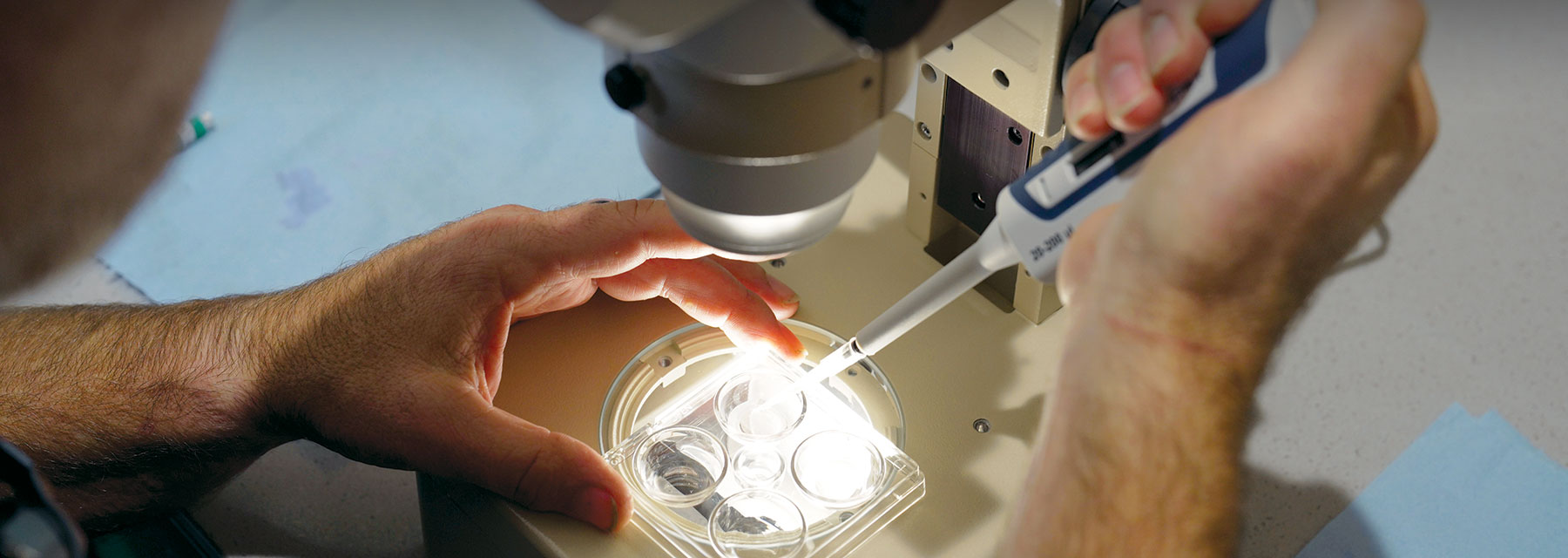
Dr. Cole Sciba oversees the reproduction division at Weems and Stephens Equine Hospital, which offers services such as Intracytoplasmic Sperm Injection (ICSI), embryo transfer and management of subfertile mares. The reproduction center is known for its team of experts, on-site and mobile lab services and around-the-clock emergency availability that contribute to its strong presence in the equine community in Texas and surrounding states.
Dr. Cole Sciba oversees the reproduction division at Weems and Stephens Equine Hospital, which offers services such as Intracytoplasmic Sperm Injection (ICSI), embryo transfer and management of subfertile mares. The reproduction center is known for its team of experts, on-site and mobile lab services and around-the-clock emergency availability that contribute to its strong presence in the equine community in Texas and surrounding states.
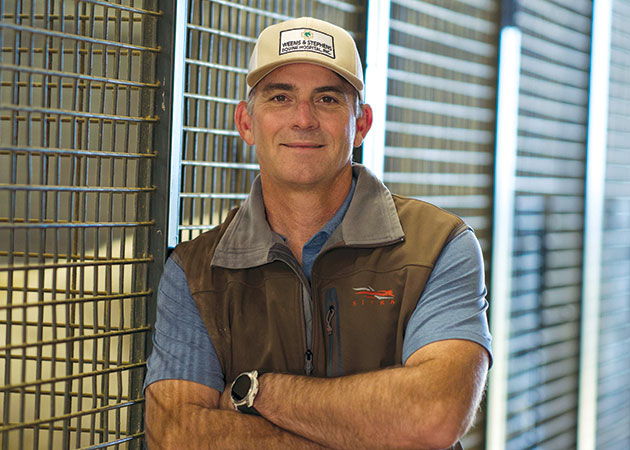
Leading its highly acclaimed reproduction division is Cole Sciba, DVM. Dr. Sciba oversees a comprehensive and specialized facility, offering services such as Intracytoplasmic Sperm Injection (ICSI), embryo transfer, and management of subfertile mares. The reproduction center is known for its team of experts, on-site and mobile lab services and around-the-clock emergency availability that contribute to its strong presence in the equine community in Texas and surrounding states. A native son of Victoria, Texas, located about 50 miles from the Gulf of Mexico, midway from San Antonio and Houston, Dr. Sciba is a born and bred ranch kid who spent his early years on his grandfather’s cattle ranch. Horses were part of the program, a natural component of daily life. He was atop a horse from the word “go,” before trading ranch work for junior rodeo, high school rodeo, then college rodeo where he backed into the box and nodded in the steer wrestling. A proud Fightin’ Texas Aggie, Dr. Sciba graduated with his Doctor of Veterinary Medicine degree from Texas A&M in 1999 and left College Station pointed north toward Aubrey, Texas, and the start of a storied career at Weems and Stephens. “I was just a kid from South Texas,” he remembers. “It wasn’t until partway through college that I realized my passion was horses. I switched gears right then, and, from that moment on, there’s never been a question. One hundred percent — this is what I was meant to do.”
Some 26 years later, Dr. Sciba, who became a partner in the practice in 2002, is still all-in and deeply invested in serving new and longtime clients and their horses. His clinical interests are reproduction, embryo transfers, lameness and colic surgery. Landing in reproduction by happenstance, he’d argue that perhaps there was a greater plan in action. He’s had a front row seat to the show, watching the profession he loves evolve with immense forward progress over his tenure in practice. Veterinary medicine in general, but particularly reproduction, has seen nothing short of revolutionary changes. “Veterinarians may have been doing embryo transfers when I first started, but it’s nothing compared to what we’re doing now. The numbers are just so much greater, the volume of mares and recips (recipient mares) we’re handling and the advent of ICSI has changed the game.”
Numerous foundational achievements in veterinary medicine have lengthened the lifespan of not just equine athletes but of stallions, broodmares and recips. Positive advancements, notwithstanding, challenges remain, he said, such as attempting to flush embryos from older mares that may have a higher occurrence of age-related reproductive issues. “Our goal is to keep these mares healthy and reproductively fit for as long as possible,” Dr. Sciba says. “Healthy mares equate to healthier babies. We watch their diets closely, and we’re looking for lameness, signs of metabolic dysregulation and so many other factors. The great majority of our clients are attuned to the needs of these mares and taking a preventive approach to keeping them healthy.”
A key factor in better managing older and problem mares is nutrition, and it’s a tool Dr. Sciba readily deploys. “A nourished, healthy mare will usually be an easier mare, reproductively speaking,” says Dr. Sciba. “Underfed mares are just as difficult as the overfed mares, and we’re dealing with unique issues on both fronts. Gone is the thinking that you can just give these mares a scoop of feed in the morning and at night, throw them some hay, and they’re fine. We’re paying much better attention to what they need, what they’re being fed and what the unique requirements are of each mare.” While broodmares were once considered a mere vessel to grow and deliver a foal, veterinarians instruct clients that mare health directly influences the wellness of the foal, and sometimes trickles through generations of offspring. “While we’re making more informed, diligent choices in terms of the diet and supplementation for both mares and stallions, we do see tough cases that require us to level up,” Dr. Sciba says of the nutritional focus. “Honestly, when I saw that Platinum launched PlatinumVET™ Reproductive Care, I thought, ‘Well, may as well give it a try.’ I didn’t necessarily have any expectations. The results I saw have made it a regular tool that I reach for in these more challenging cases to provide both mares and stallions with the additional support they need.”
As is the case for many facets of equine veterinary medicine, time is a critical factor in determining success. “If we’re going to have the opportunity to change course for these tougher cases, we need the time to work with them,” he insists. “If someone brings me a mare in February wanting to flush two embryos from her and her body condition score is at a four (underfed on the nine-point Henneke scale), then we could be fighting her cycles for two or three months while we get her nutrition right and attempt to add weight on her. My clients are largely well-informed on this subject, but I’d encourage horse owners to start early, consider the mare’s health and condition and take preventive action in the fall rather than waiting until it’s a last-resort situation.” While underfed mares and stallions are certainly a problem, overfed or obese horses — with BCS rankings of seven or higher — are equally concerning due to weight-related health concerns spanning joint and soft tissue strain to metabolic conditions and hormonal complications.
“The reproduction aspect of veterinary medicine is extremely rewarding. It’s mostly good news in this specialty. We’re able to help create life, and that’s something I enjoy.”
— Cole Sciba, DVM, Weems and Stephens Equine Hospital
While Dr. Sciba spends his days with a full slate of appointments, he’s quick to find the quiet joy in a vocation that he values. “The reproduction aspect of veterinary medicine is extremely rewarding,” he says in earnest. “It’s mostly good news in this specialty. We’re able to help create life, and that’s something I enjoy. I have several farms where I’m there almost every day for five months straight. These people aren’t just clients, they’re friends.” On these rounds, the miles clocked bring tranquil moments to reflect and absorb not just the beauty of the Cross Timbers region of North Texas but the gratitude he has for a life and career that continues to provide fulfillment and purpose. “I really enjoy driving down the road and going to the different farms. I get out, see different things and see my clients right there in their element.” It’s when he points his truck home that Dr. Sciba simply becomes Cole, husband to Beth and dad to three grown boys who are tackling the world, each in their own right. Among them is a second-generation equine veterinarian, a computer coding wiz and a business major finishing up his college pursuits at Oklahoma State University in Stillwater.
Aside from his tight-knit family, another of Dr. Sciba’s passions is at the end of a rod and reel, but fishing, hunting and his interests as an outdoorsman are just a temporary escape from his true commitment. “Horses just amaze me,” he says. “These 1,000-pound animals are such athletes, and they let us do things to them as veterinarians that, when you think about it, are kind of crazy. I’ve always been amazed by what they can do and get done, and, by the way they can connect with people. I’ve been blessed to take care of them.”
Request Platinum Magazine
Read inspiring stories of success, companionship and collaboration
At Platinum Performance, we love to showcase the success of our clients, their horses and the veterinarians that care for them. All issues of Platinum Magazine are complimentary.